Happy Tuesday everybody!
Most "side hustles" are just second jobs in disguise. They demand new skills, portfolios, consistency, and a ton of unpaid ramp-up time.
But there's a category that's way simpler: get paid to share your opinion.
Not "take endless surveys for pennies", I mean actual user studies and focus groups where companies pay $50 to $300+ per hour to understand what normal people think.
And here's the thing, this compounds quickly. If you stay consistent and follow the playbook I lay out in this article, it's not hard to reach $5k a month within a few months with just a couple hours of work each day.
Why companies pay real money for this
Before launching a product, redesigning an app, or running a campaign, companies need to know what real people think. Not data from analytics dashboards. Actual human reactions and opinions.
That's why they pay. A 60-minute interview might cost them $150, but the insight they get back is worth thousands in avoided mistakes.
Real studies happening right now
These are actual nationwide studies open to both men and women. This is what's out there if you know where to look:
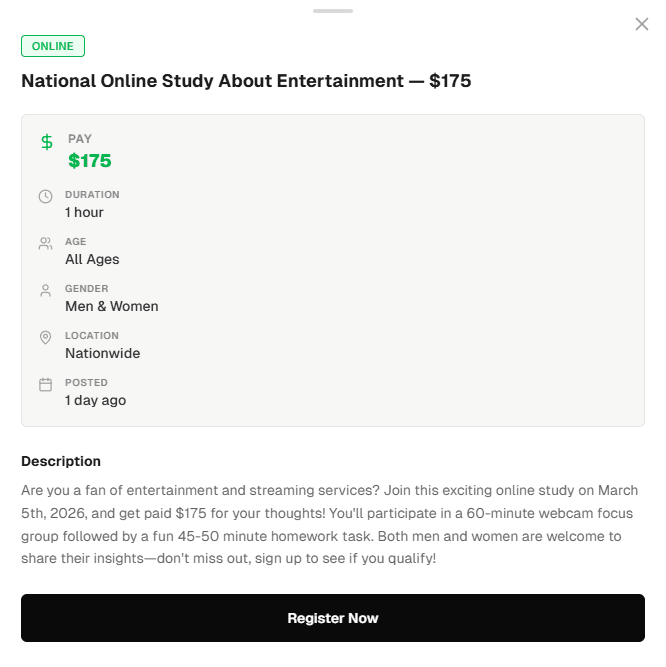
$175 for a 60-minute webcam focus group about entertainment and streaming. Open to all ages, men and women, nationwide.
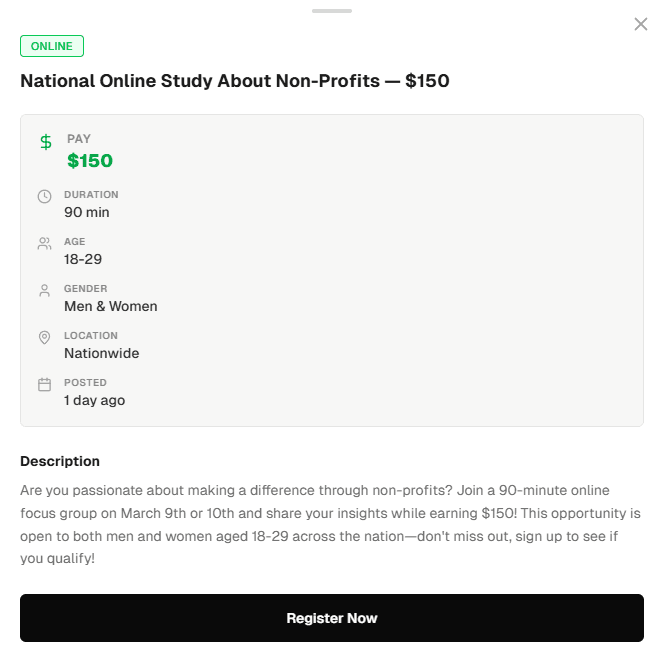
$150 for a 90-minute online focus group about non-profits. Ages 18–29, men and women, nationwide.
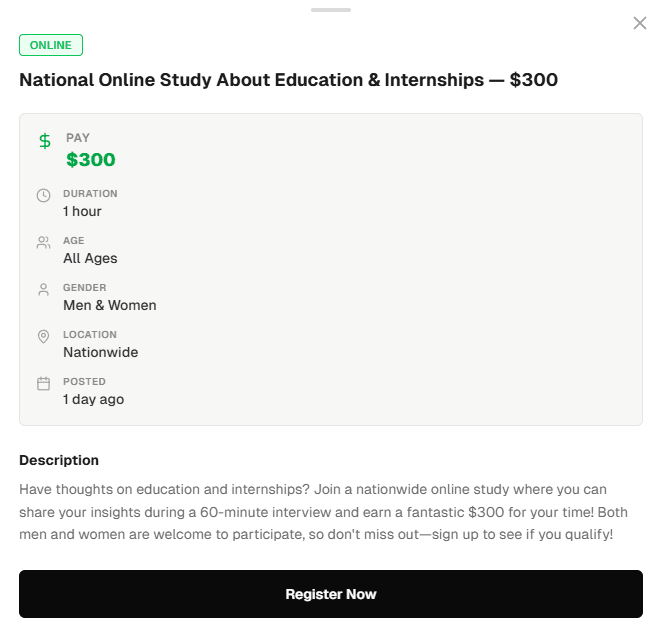
$300 for a single 60-minute interview about education and internships. All ages, men and women, nationwide. This is the kind of payout that makes people pay attention.
The problem with finding these opportunities
The issue isn't that paid studies don't exist. It's that most people don't know where to find them, don't apply consistently, or waste time on low-quality survey sites.
Paid research is different. Companies will pay well when you fit a demographic they need, work in a certain industry, use specific products, or match a lifestyle,parents, students, remote workers, etc.
The tool I've been using
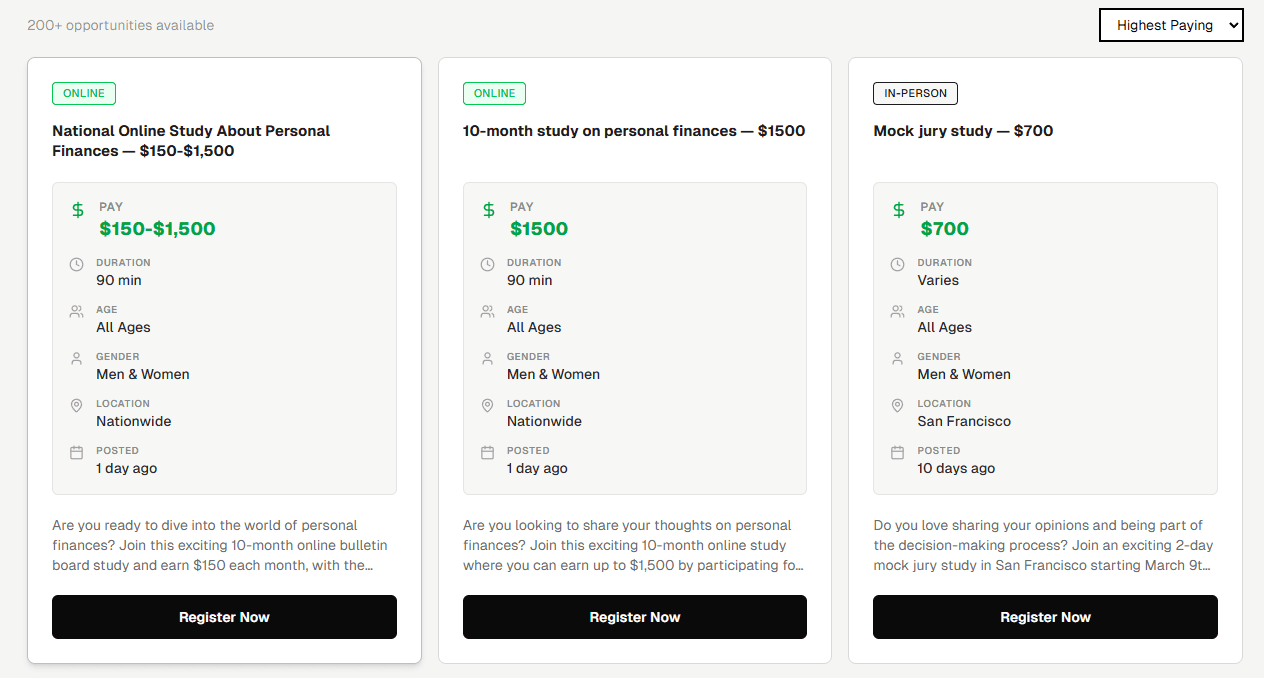
I found Paid Studies ,it's basically a marketplace of paid research opportunities. Remote user studies, online focus groups, and occasional in-person sessions, all in one place.
What makes it work is the format. You're not hunting across random sketchy sites. You can browse hundreds of opportunities and filter by topic, type (online vs in-person), location, and payout.
The pay ranges are legit: $50 to $300+ per hour, depending on length and how specific the audience needs to be.
A few examples of what you'll find:
- A 60-minute interview about workplace tech ($60–$200)
- A 90-minute focus group reacting to ad concepts ($100)
- Multi-day at-home studies paying a few hundred dollars
- Online surveys and taste tests ($50–$150)
How to actually get picked (IMPORTANT!)
This is the part most people skip. They apply once or twice, hear nothing, and assume it doesn't work. Here's the reality: it's a numbers game.
Out of every 10 studies you apply to, expect to hear back from 1 to 3, and get accepted to roughly 1. That one study could pay $100 to $300. The math works, but only if you keep applying.
Three things that separate people who get picked from those who don't:
- Slow down on the screener. Every screener is what decides if you're worth $50 to $300+ per hour. Take 2 to 3 minutes. Read every question carefully. Rushed answers get filtered out immediately.
- Be specific, not generic. "I shop online" means nothing. "I order from Amazon and Target about twice a month" tells them exactly who you are. Give real details about your habits, the products you use, and how you spend your time. Specificity is what gets you selected.
- Match the study. Before answering, ask yourself: who are they trying to find? Then talk about the parts of your life that actually fit. You're not changing who you are — you're making it clear why you belong.
Why this compounds over time
Here's what nobody tells you: once you get picked and actually show up, you're more likely to get picked again. Research companies track reliability. If you showed up on time, gave thoughtful answers, and were easy to work with, you go to the top of their list for future studies.
That first acceptance is the hardest. After that, the invitations start coming to you. People who stick with it for a few months end up with a steady stream of opportunities without even applying to everything.
One good session a week can cover groceries, subscriptions, or your phone bill. And it only gets easier from there.
The playbook
- Apply fast. Good studies fill up within hours. Speed matters.
- Apply often. New opportunities appear every day. Make it a habit to check and apply.
- Be honest. If you fit, apply. If you don't, skip it. Faking your way in wastes everyone's time and gets you flagged.
- Show up. Reliable people get invited back. This is how one acceptance turns into a recurring thing.
This is the kind of side hustle that fits into a normal week. No content to create, no clients to manage, no skills to learn. Just show up, share what you think, and get paid.
Catch you next week, Andreas